
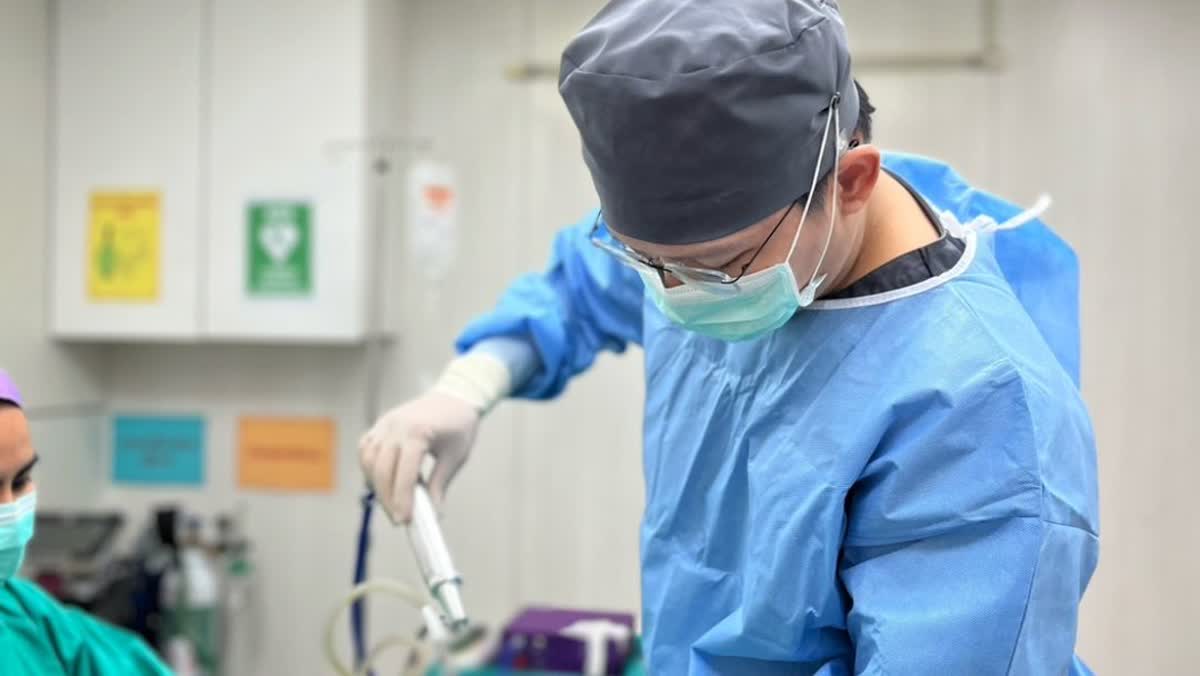
Abdominal Fat or Diastasis Recti? A Doctor’s Assessment Before BodyTite
A protruding or bulging abdomen may be caused by more than excess fat beneath the skin. It may also involve diastasis recti, or separation of the abdominal muscles, which commonly occurs after pregnancy or rapid weight gain. At Mediqueen Clinic Pattaya, under the care of a physician (MD, medical license no. 37670), a physical examination to distinguish between possible causes is an essential first step before considering body contouring with BodyTite. This helps tailor treatment to the underlying concern and each individual’s body structure.
Key points
- A bulging abdomen may result from subcutaneous fat, visceral fat, or diastasis recti, requiring assessment by a doctor.
- Diastasis recti involves stretching of the connective tissue between the abdominal muscles, allowing the abdomen to protrude even in someone who is slim.
- BodyTite uses radiofrequency-assisted liposuction (RFAL) to help tighten skin and reduce localized fat, but has limitations when significant abdominal muscle separation is present.
- Consulting a specialist helps support treatment planning that considers safety and the underlying condition.
Understanding the Differences Between Abdominal Fat and Diastasis Recti
A protruding abdomen can have several causes. Initial observations may help explain the underlying mechanisms. Subcutaneous abdominal fat usually feels soft and can be pinched. Visceral fat, located inside the abdominal cavity, may give the abdomen a fuller, firmer appearance, although this does not establish the strength of the abdominal wall. Diastasis recti occurs when the left and right rectus abdominis muscles separate along the midline as the connective tissue between them stretches. This may produce a central ridge when the abdominal muscles contract, or a noticeable gap between the muscles.
Diastasis recti is commonly associated with substantial stretching during pregnancy. Repeated heavy lifting and prolonged excess weight may also contribute to increased pressure on the abdominal wall, affecting its support function. General abdominal exercises alone may not adequately address the concern without identifying the underlying cause. A doctor therefore needs to examine the skin, fat, and abdominal muscles before any procedure.
The Doctor’s Role in Assessment Before BodyTite
At Mediqueen Clinic Pattaya, assessment by a doctor is central to body-contouring care. The doctor will review the patient’s medical history, perform a physical examination, and assess abdominal muscle function to evaluate the width and depth of any separation, as well as the thickness of the subcutaneous fat layer. This helps identify the main source of the concern.
A detailed assessment by the physician (medical license no. 37670) helps guide an individualized treatment plan. If the main concern is excess fat combined with loose skin, BodyTite may help reduce fat and tighten the skin. If abdominal muscle separation is also present, the doctor will explain treatment limitations and realistic expectations, with attention to safety and achievable outcomes.
Understanding BodyTite Technology and How It Works
BodyTite combines radiofrequency energy with liposuction, a technique known as radiofrequency-assisted liposuction (RFAL). Energy is delivered through an applicator with components positioned beneath and above the skin, helping break down fat while stimulating collagen contraction in the underlying tissue. This may help tighten the treated skin and reduce laxity following fat removal.
The system incorporates temperature monitoring and control to help limit excessive heating of surrounding tissues. These features are intended to limit tissue injury, although recovery varies and is not necessarily faster than with conventional methods. BodyTite primarily addresses subcutaneous fat and loose skin. It cannot directly repair abdominal muscle separation with sutures, which makes assessment of the abdominal wall before treatment particularly important.
Who May or May Not Be Suitable for BodyTite?
Potential candidates for BodyTite include people with persistent localized fat, such as around the abdomen, waist, or flanks, together with mild to moderate skin laxity, who want skin tightening alongside body contouring. Candidates should be in good general health, have no medical contraindications, and have realistic expectations.
People with substantial abdominal muscle separation, such as a gap exceeding approximately 2–3 inches, or significant excess skin following rapid weight loss may not be suitable for BodyTite alone. Suitability cannot be determined by gap width alone. A doctor may consider additional options or recommend care suited to the individual’s body structure to help reduce the likelihood of unmet expectations.
Comparing Options for Addressing Abdominal Concerns
In addition to BodyTite, other approaches may be considered depending on the cause. These include weight-management programs or prescription weight-management injections, such as Mounjaro®, for eligible patients with excess weight or excess visceral fat. Other approaches include nonsurgical devices that use cooling or heat to reduce localized subcutaneous fat, or fat-dissolving injections, such as SISI Fat and Pandora Fat, for smaller localized deposits. The suitability and approved indications of any medication, device, or injectable product should be checked by the treating doctor.
For diastasis recti, targeted exercises, such as appropriate core training under a physiotherapist’s guidance, may help improve symptoms in mild cases. If there is a suspected muscle tear or a very wide separation, consulting a doctor to assess medical options that address the underlying problem is appropriate.
Precautions and Self-Care After Assessment
After assessment and consultation, anyone who proceeds with BodyTite should follow the doctor’s instructions carefully. These may include wearing a compression garment for the prescribed period to support the skin and underlying tissues, reduce swelling, and help the treated area settle.
BodyTite results generally become more apparent as swelling subsides. Results vary by individual and depend on factors such as skin condition and aftercare. Patients should also avoid activities that place substantial pressure or strain on the abdomen during the initial recovery period and attend scheduled follow-up appointments.
FAQ
How can I tell whether my abdominal bulge is caused by fat or muscle separation?
An initial check involves lying on your back and gently lifting your head as if beginning a sit-up. A noticeable groove or central ridge may suggest diastasis recti. However, this does not confirm a diagnosis. A doctor should perform a detailed assessment of the abdominal wall to identify the cause.
Can BodyTite treat diastasis recti?
BodyTite cannot directly treat diastasis recti. It is designed to reduce subcutaneous fat and tighten loose skin, but it cannot repair abdominal muscle separation with sutures.
Is there a fee for a pre-treatment assessment at Mediqueen Clinic Pattaya?
Please contact the clinic in Pattaya directly for details about arranging an assessment and consultation with the physician (medical license no. 37670), including any applicable fees.
How long is recovery after BodyTite?
BodyTite is a procedure performed through small incisions. Patients can generally return home the same day if their doctor considers it appropriate. A compression garment should be worn, and strenuous activities avoided, as directed by the doctor. Results become more apparent gradually, and recovery time and outcomes vary by individual.
⚠️ Results vary by individual · general information, not personal medical advice · please consult a doctor before deciding.
Free consultation on LINE